

Summer 2026 Kenai River Water Quality Monitoring Data – Preliminary Results Available!
October 6, 2026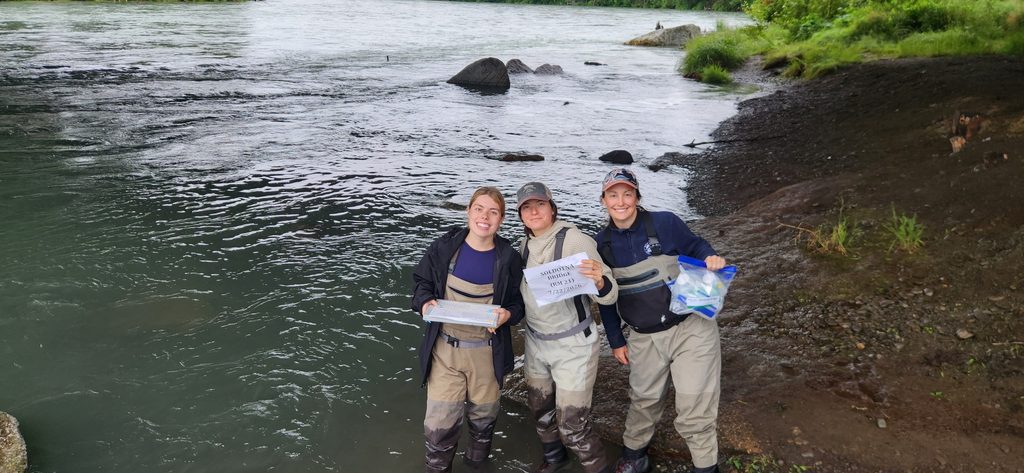
Kenai Watershed Forum has received all laboratory results from its Summer 2026 Baseline Water Quality Monitoring event. The results are being prepared for upload to the Environmental Protection Agency’s Water Quality Exchange, a public data repository for water quality data. In the meantime, we want to share them with you!
Once the data is prepared, it will be integrated into an in-progress comprehensive summary report, similar to our previous report published in 2016.
We worked with three laboratories in Summer 2026:
- Soldotna Wastewater Treatment Plant – Soldotna WWTP provided analyses of Fecal Coliform.
Download Summer 2026 Soldotna WWTP Fecal Coliform Preliminary Results.
- Kenai Wastewater Treatment Plant – Kenai WWTP provided analyses of Total Suspended Solids.
Download Summer 2026 Kenai WWTP Total Suspended Solids Preliminary Results.
- SGS Laboratories, Anchorage – SGS provided analyses of all other substances monitored in Summer 2026, including nutrients like nitrogen and phosphorus, hydrocarbons, and metals like zinc, copper, lead, and others.
Download Summer 2026 SGS Preliminary Results for metals, hydrocarbons, and nutrients.
We are so extremely grateful for the City of Soldotna, City of Kenai, and SGS Laboratories for providing in-kind services that support this important work!
For questions about Summer 2026 water quality results, contact our Water Quality Coordinator, Benjamin Meyer. To get involved with future Baseline sampling events, contact our Hydrology Coordinator, Alie Minium. Thank you again to all the participants and volunteers who made this event happen!
To learn more about this project, visit our website section. We hope to see you on the river for our Spring 2027 event!
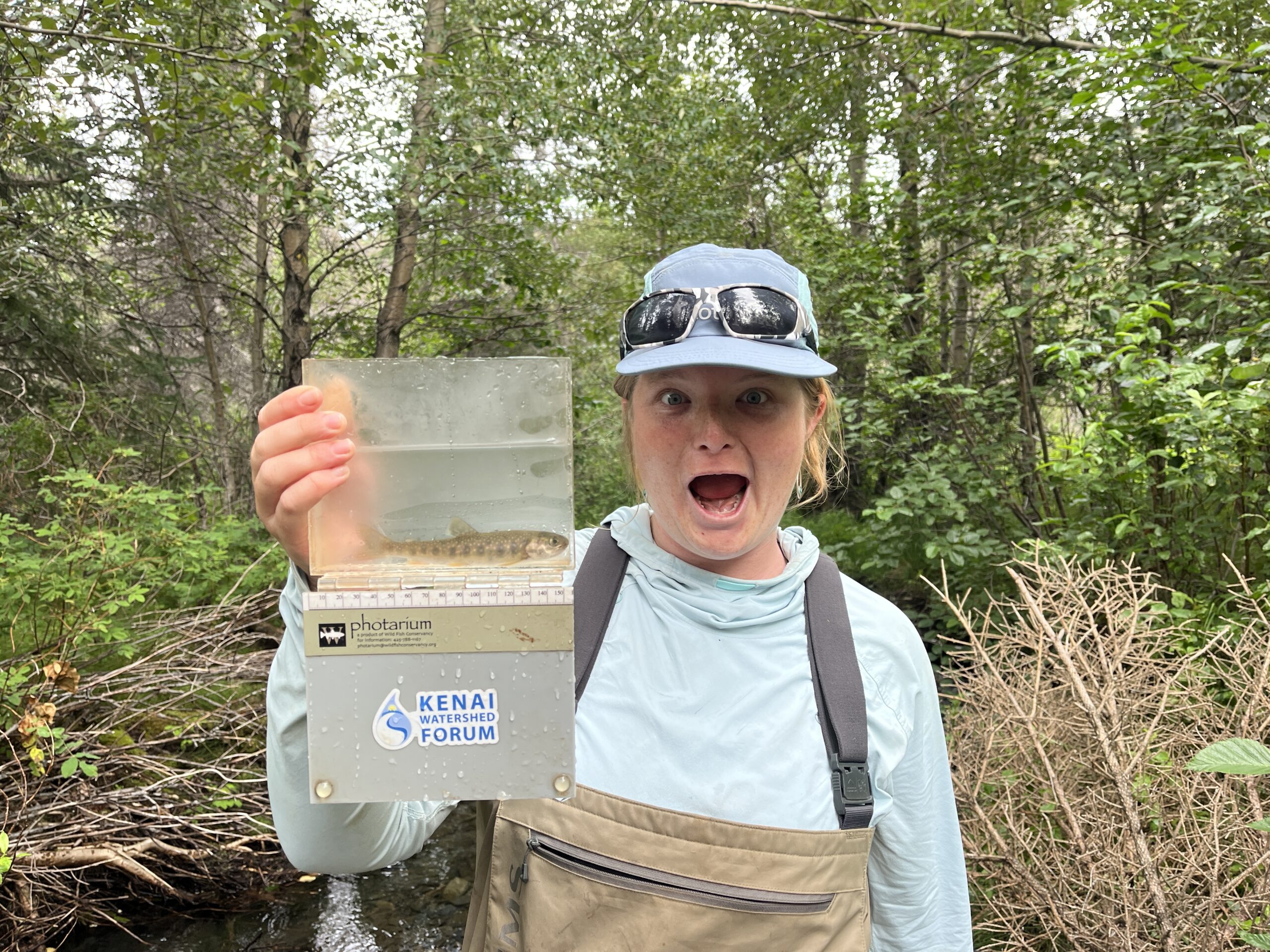
Lauren Crane (Summer 2026)
September 25, 2026A few months ago, I traded life in a big city in California surrounded by friends and family to come up to Alaska – a place I had never been before and knew not a soul in! I was nervous for the transition, but mostly excited about all the new opportunities that were waiting for me. What I didn’t expect was to be met with kindness and generosity unlike any other place I’ve been to before as the Alaskans I encountered quickly made me feel at home and showed me the ropes of their beautiful home state.
It started the moment I landed in Kenai when Brandon picked me and Sam up from the airport and gave us a quick tour of the town he grew up in. He taught me some important local words and kindly instructed me: “it’s Denali not Mt. McKinley”. Very grateful for that tip. Fly fishing has been a random dream of mine for years and Chris and Cierra helped it come true by taking me fishing twice and cheering me on when I caught my first ever rainbow trout. Haley acted as my Alaskan sister and swiftly got me out line dancing at her bimonthly lessons. We inspired each other off the dance floor too as she encouraged me to take up rainbow trout facepainting and I assisted her to establish little free flybraries at public use fishing sites across the Kenai (the coolest project ever). Candace showed me how to make homemade kefir and lent me her brand new backpacking stove which I took with me all over the peninsula. A beloved Stream Watch volunteer, Shannon, allowed me to use her kayaks for a camping trip on Fox Island in Resurrection Bay. Alie took Katherine and I to a secret camping spot on Kenai Lake and to Seward after we danced the night away at a concert in Cooper Landing. Finally, Ava showed me all her favorite hikes and helped me catch a massive sockeye salmon. These are just a few examples of the abundant generosity and kindness I experienced in Alaska which made my summer so special.
Being a Stream Watch Intern this summer has been a valuable experience in pushing myself outside of my comfort zone and experiencing endless growth. I’ve become more familiar with fishing regulations than I ever thought possible. I learned how to wade in glacial rivers while pounding rebar, fixing fencing, and talking with (sometimes cranky) anglers. I went electrofishing and helped improve data on fish habitat in remote areas. Stream Watch volunteers planted hundreds of willows and I helped care for them for an entire summer. I also got to work with inspiring kids and young people who I learned so much from.
Coming to the Kenai changed my life by opening my mind to a lifestyle and culture of reciprocity and stewardship that I had never experienced before. As stewards, we take care of the river and the fish so they stay healthy and strong. In return, the salmon take care of us. I’ll be leaving with an Alaska-sized hole in my heart so I may just have to come back next summer! Thank you to KWF for opening your home to me. I am eternally grateful.
P.S. I hope my legacy continues in the form of rainbow trout facepaint at every future event!
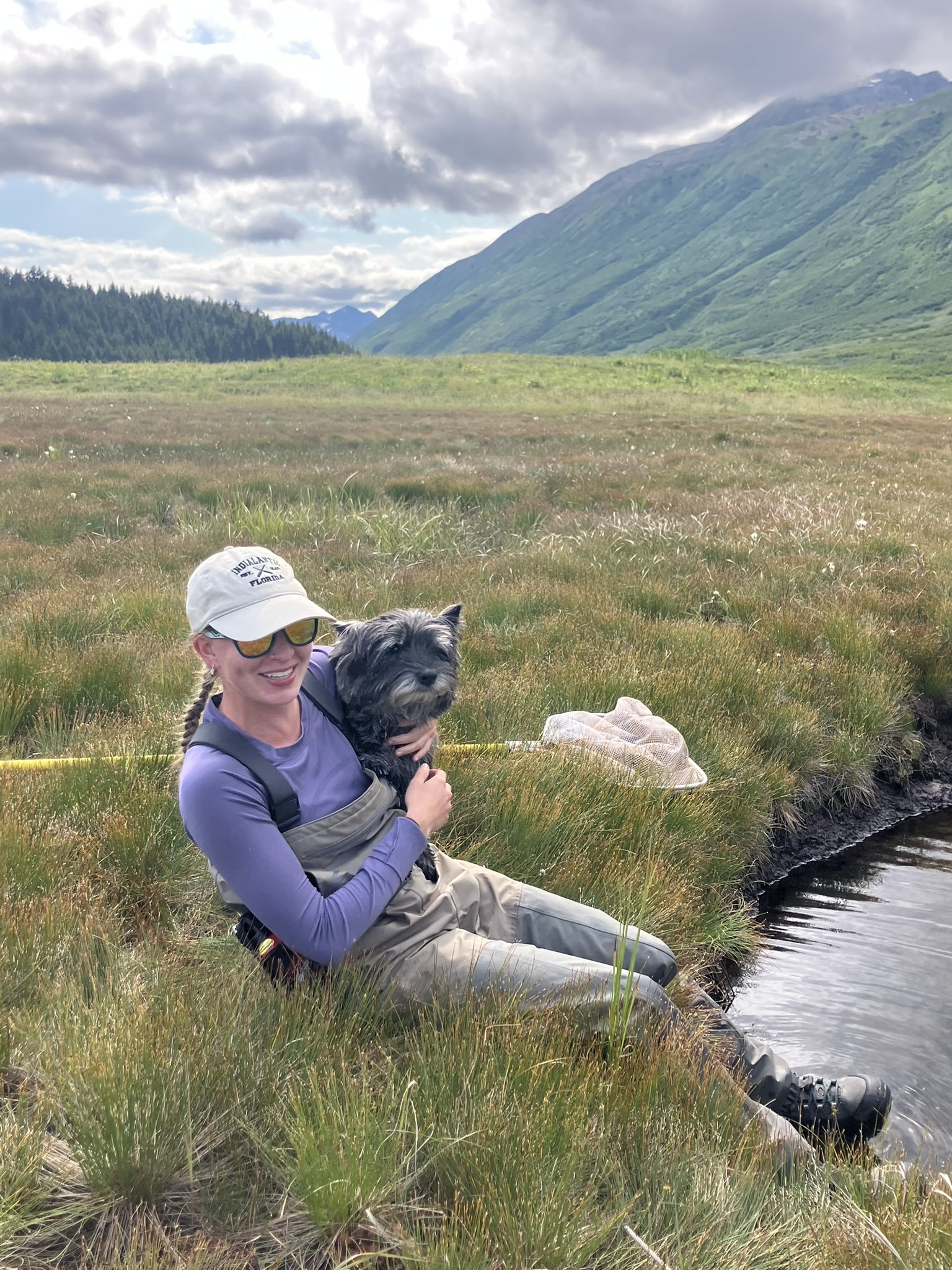
Katherine Goergen (2026)
September 25, 2026I had no idea what to expect going into this summer working with KWF. I was starting my very first internship as well as being super far from my family for the first time. However, from the moment I landed in Kenai, I felt welcomed and supported by everyone I was working with, and quickly felt at home.
With this being my first internship, I felt like I knew absolutely nothing, but Ben and Alie were great mentors to learn from and never made me feel like I was stupid for not knowing how to do something. Throughout the summer I gained so many new skills that
I hope I will be able to implement in my future work, not just in the field, but with community education/engagement and GIS/data stuff. I had so many great opportunities that really opened my eyes on what I could pursue as a career post-grad, or for future internships. All of the staff at KWF created an environment where I was able to grow professionally as well as personally, allowing me to come out of my shell and therefore fully experience summer. I don’t think I’ll ever be able to forget the people
I met or worked with this summer, as they taught me so much, both regarding work a well as being an adult and preparing for life after college.
I am so thankful for everyone at the Kenai Watershed Forum for giving me the opportunity to work with them this summer. I grew so much as a person, and I credit that to the people I was surrounded and supported by. This will forever be one of my favorite experiences and I am so glad I was able to have my first internship be something that has left such a big impact on me.
Spring 2026 Kenai River Water Quality Monitoring Data – Preliminary Results Available
June 17, 2026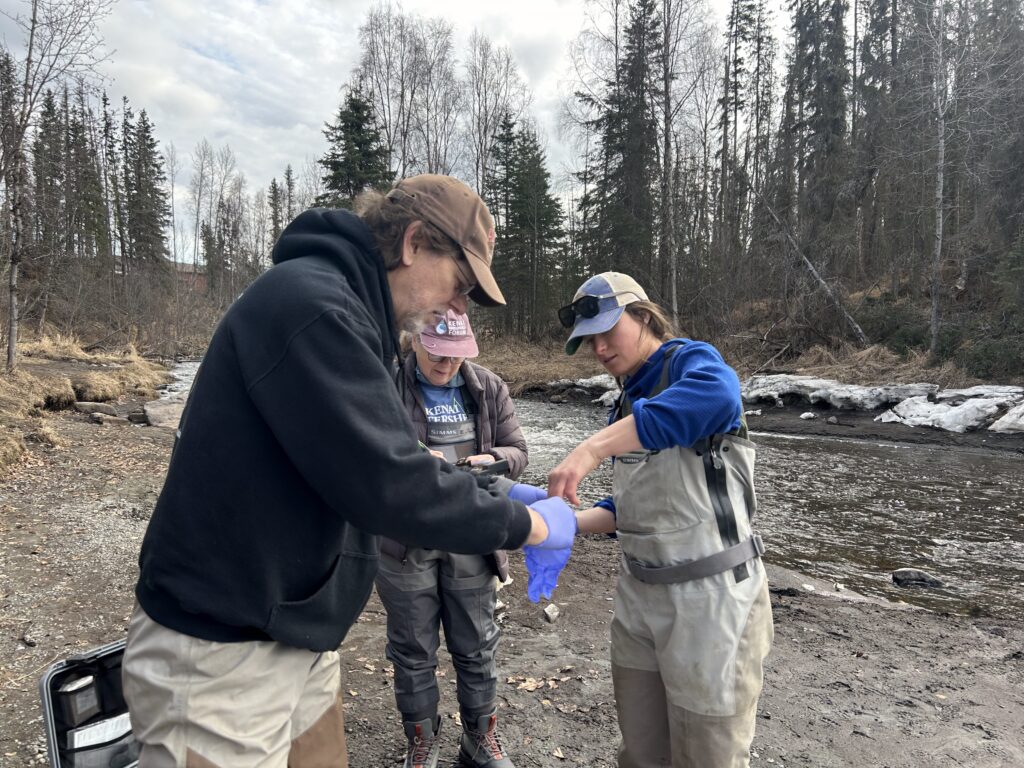
Kenai Watershed Forum has recieved all laboratory results from it’s Spring 2026 Baseline Water Quality Monitoring event. The results are currently being prepared for upload to the Envionmental Protection Agency’s Water Quality Exchange, a public data repository for water quality data.
Once the data is prepared, it will be integrated into an in-progress comprehensive summary report, similar to our previous report published in 2016.
We worked with three laboratories in Spring 2026:
- Soldotna Wastewater Treatment Plant – Soldotna WWTP provided analyses of Total Suspended Solids and Fecal Coliform.
Download Spring 2026 Soldotna WWTP Total Suspended Solids Preliminary Results.
Download Spring 2026 Soldotna WWTP Fecal Coliform Preliminary Results.
- Kenai Wastewater Treatment Plant – Kenai WWTP provided analyses of Total Suspended Solids. Moving forward, we will use Kenai WWTP for all TSS analyses, and Soldotna WWTP for all Fecal Coliform analyses.
Download Spring 2026 Kenai WWTP Total Suspended Solids Preliminary Results.
- SGS Laboratories, Anchorage – SGS provided analyses of all other substances monitored in Spring 2026, including nutrients like nitrogen and phosphorus, and metals like zinc, copper, lead, and others.
Download Spring 2026 SGS Spring 2026 Preliminary Results for metals and nutrients.
We are so extremely grateful for the City of Soldotna, City of Kenai, and SGS Laboratories for providing in-kind services that support this important work!
For questions about Spring 2026 water quality results, contact our Water Quality Coordinator, Benjamin Meyer. To get involved with future Baseline sampling events, contact our Hydrology Coordinator, Alie Minium. Thank you again to all the participants and volunteers who made this event happen!
To learn more about this project, visit our website section.
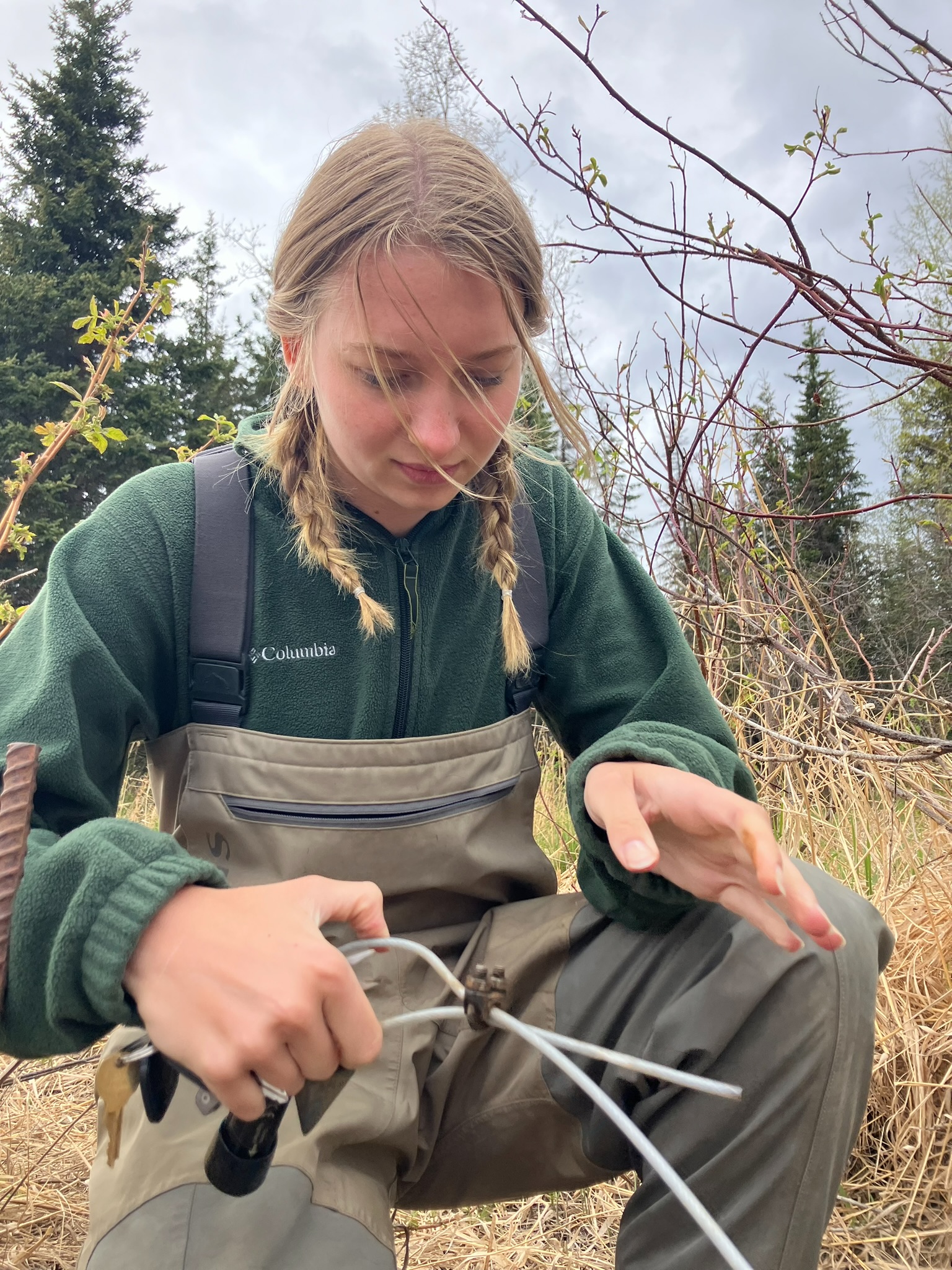
Fresh data now available on the AKTEMP Water Temperature Database!
March 31, 2026Interested to see the daily temperature fluctuations of a stream near you? The Kenai Watershed Forum maintains 20 water temperature logger sites across our local stream networks. These temperature loggers record every 15 minutes, all year long! New water temperature data for the Central Kenai Peninsula has just been uploaded and is now available on the AKTEMP Water Temperature Database.
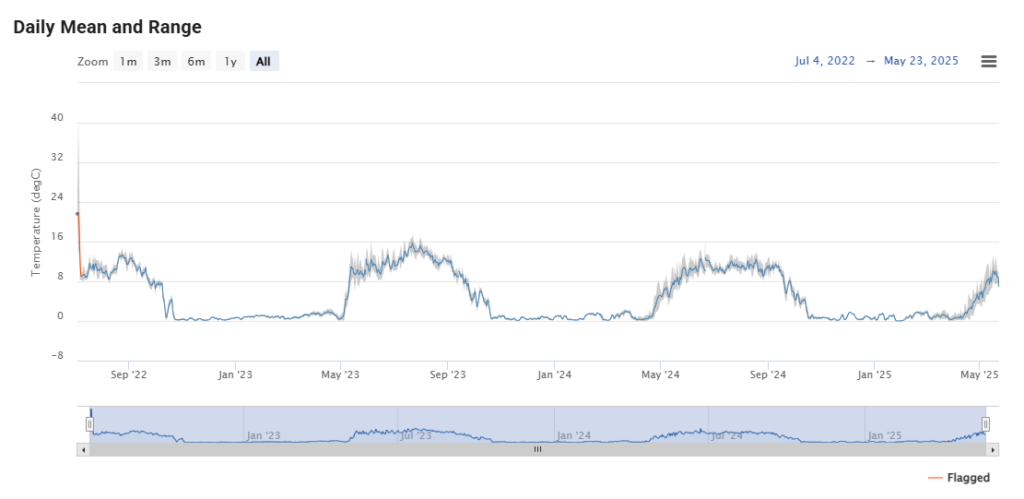
Temperature loggers help scientists, resource managers, and community members better understand stream health, salmon habitat conditions, and how local waterways respond to seasonal and long-term environmental changes.
Whether you’re a researcher, angler, educator, or simply curious about local waters, you can now explore the latest temperature records and see how streams across the region are changing.
View the updated data and learn more at the University of Alaska Center for Conservation Sciences’ AKTEMP Website.
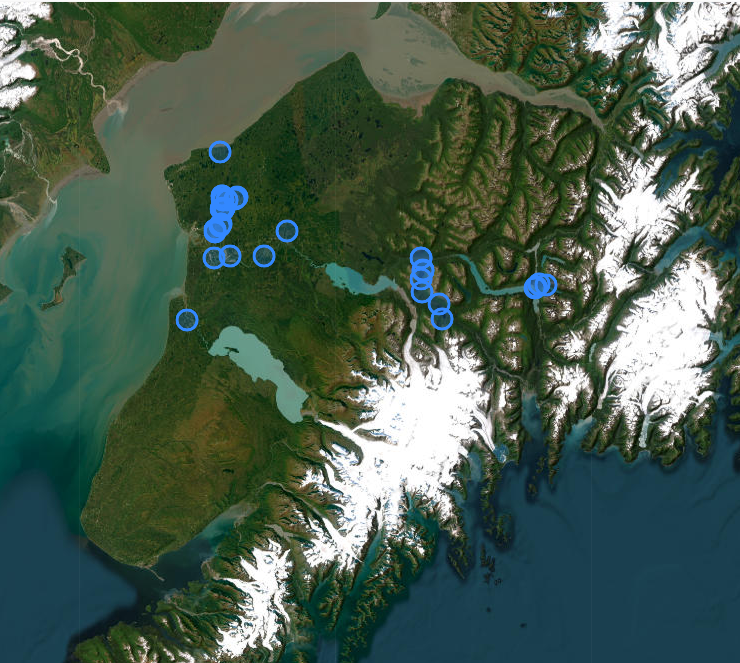
A huge thanks to the USGS Climate Action Science Center, Alaska Sustainable Salmon Fund, University of Alaska Center for Conservation Sciences, Cook Inletkeeper, and many others for supporting this ongoing work. Open data like this helps support informed stewardship of our rivers and salmon habitat. Take a look and dive into the numbers!
Wetlands in our Backyards
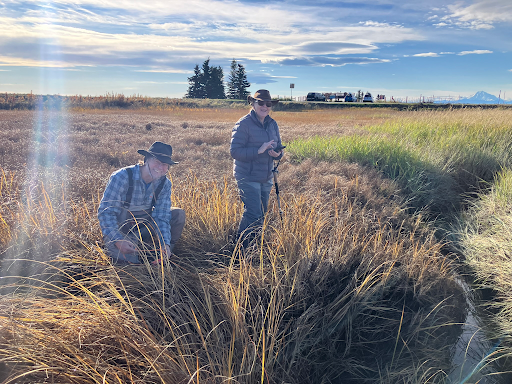
March 18, 2026Kenai Watershed Forum volunteers study fish habitat in wetlands near City of Kenai Docks.
With spring right around the corner, some might find themselves asking “where will all the snowmelt go?” To this we answer; Wetlands!
Wetlands are some of the most vital–and often overlooked–ecosystems on the Kenai Peninsula. From filtering water and reducing flood risk after a winter full of heavy snow loads, to providing essential habitat to wild salmon, birds, and other wildlife – wetlands support the health of our entire region’s watershed.
Dr. Mike Gracz, a previous Kenai Watershed Forum scientist led research between 2005-2015 that culminated in the creation of a high-resolution GIS map supported by extensive field data, and you can find this map on the Kenai Peninsula Borough’s KPB GeoHub, under ViewKPB.
You can find a lot more resources and details about wetlands on the Kenai Watershed Forum’s page on Cook Inlet Wetlands. The Kenai Watershed Forum is also applying for grant funding at this time to continue building community capacity–helping residents, local leaders, and partners better understand, appreciate, and conserve wetlands.These efforts will be key in ensuring future generations can benefit from healthy, functioning, intact ecosystems.
Want to learn more about how you can partner with us and support our Kenai Peninsula Wetlands? Check out our Cook Inlet Wetlands page on our website, and contact alie@kenaiwatershed.org.
Fish Habitat Mapping Community Subawards – Application Period Open from January 5th – April 4th, 2026
January 5, 2026Got an idea for a project to help support local freshwater fish habitat conservation? We have funding for you to make it happen!
- Access the Request for Proposals (RFP) here: Download Community Subawards RFP 2026
- Submit your application using the Google Form linked here: Fish Habitat Mapping Community Subawards – Application Form
The Kenai Peninsula Borough is home to tens of thousands of miles of rivers, streams, and lakes, which are home to millions of wild fish. However, only a portion of these waters have been fully mapped and surveyed to document fish habitat, a critical step for responsible management and conservation. Kenai Watershed Forum and other local organizations are working to fill this gap with innovative research; read more on our blog at https://www.kenaiwatershed.org/news-media/fish-habitat-mapping-2025/.
We need the community’s help to help make this work happen. There are several fun ways to get involved, including signing up for our Stream Watch program or getting involved with Cook Inletkeeper’s Backyard Salmonscapes program.
If you have an idea to support this work that could use funding support, we have financial support available. Four (4) awards of up to $2,500 each, will be distributed to support innovative, community-based projects that improve conservation, mapping, or outreach associated with freshwater fish habitat within the Kenai Peninsula Borough.
Project ideas include, but are not limited to:
- Covering expenses for fieldwork (travel costs, equipment purchases, etc)
- Purchase of outreach materials (e.g. more “Baby Salmon Live Here” signs)
- Covering expenses for an invited speaker for a public event
- Hosting an educational or outreach events
What’s your idea? We’d love to hear from you and help bring your idea to life. For questions, reach out to ben@kenaiwatershed.org or bookeeper@kenaiwatershed.org.
Thanks, and we can’t wait to hear from you!
– Benjamin Meyer, Research Coordinator
Kenai Watershed Forum Announces $15,000 in Environmental Education Sub-Grants
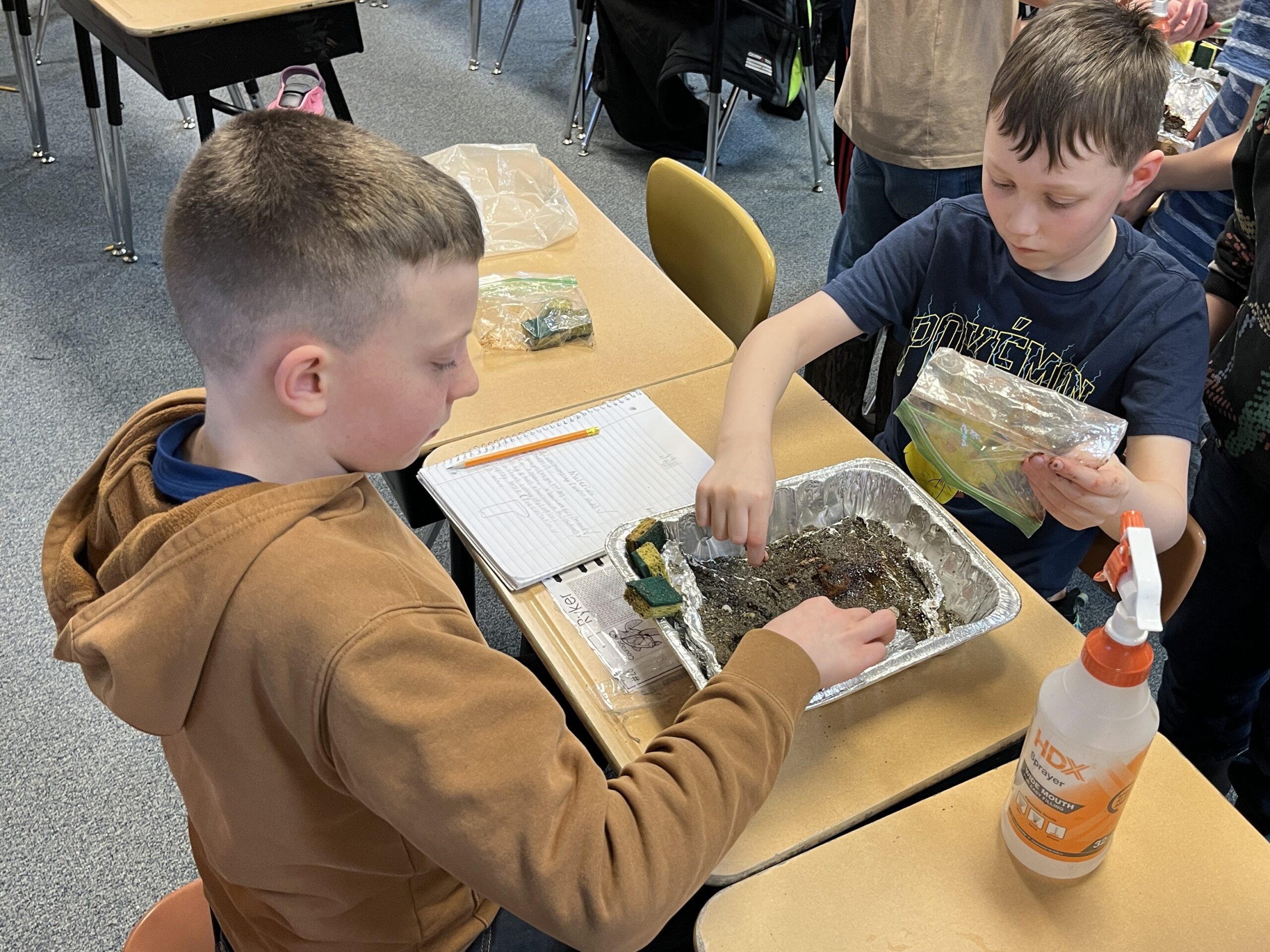
Applications Now Open for Adopt-A-Stream Programming Partnerships
Thanks to support from the Environmental Protection Agency (EPA), we’re offering approximately $15,000 in sub-grants to bring hands-on watershed education to K-12 students through our acclaimed Adopt-A-Stream program.
Access the Request for Proposal (RFP) here: Download Adopt-A-Stream Subaward RFP 2026
Submit your application using the Google Form linked here: EPA Adopt-A-Stream Subawards – Application Form
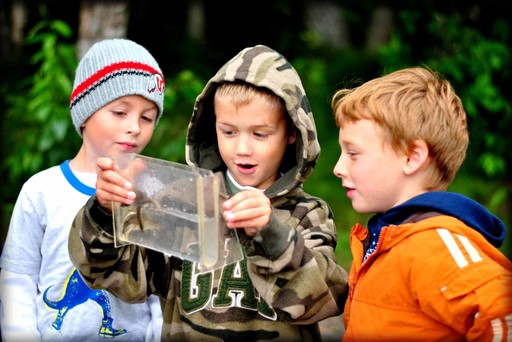
We’re seeking three partner organizations to receive approximately $5,000 each to design and deliver engaging environmental education projects that connect students with their local streams and watersheds. For over ten years, our Adopt-A-Stream program has transformed how Kenai Peninsula students understand and protect their environment through interactive classroom visits, field trips, and our popular summer camp. Now we want to expand this impact across the Peninsula with your help!
Your project can incorporate exciting Adopt-A-Stream components, such as salmon life cycles, macroinvertebrates, stream ecology, ecosystem management, and water quality monitoring. Whether you’re planning classroom activities, field investigations, or outdoor learning experiences, we’re looking for creative approaches that foster environmental stewardship and literacy in young Alaskans.
Eligible applicants include 501(c)(3) nonprofit organizations, local education agencies (such as KPBSD schools), and environmental agencies located within the Kenai Peninsula Borough. Selected partners will receive support from KWF staff in completing bi-annual and final reports, making the administrative side manageable so you can focus on inspiring the next generation of watershed stewards.
Ready to bring watershed education to life for your students? We can’t wait to see your ideas for engaging young people with the streams and ecosystems right in their backyard.
Interested? Please submit your application via this Google Form, and let’s work together to create a generation of informed environmental stewards on the Kenai Peninsula!
For any questions regarding this project, please contact KWF’s Education Specialist, Brandon Gustafson, at (brandonedu@kenaiwatershed.org) or call/text at (907) 252-3443.
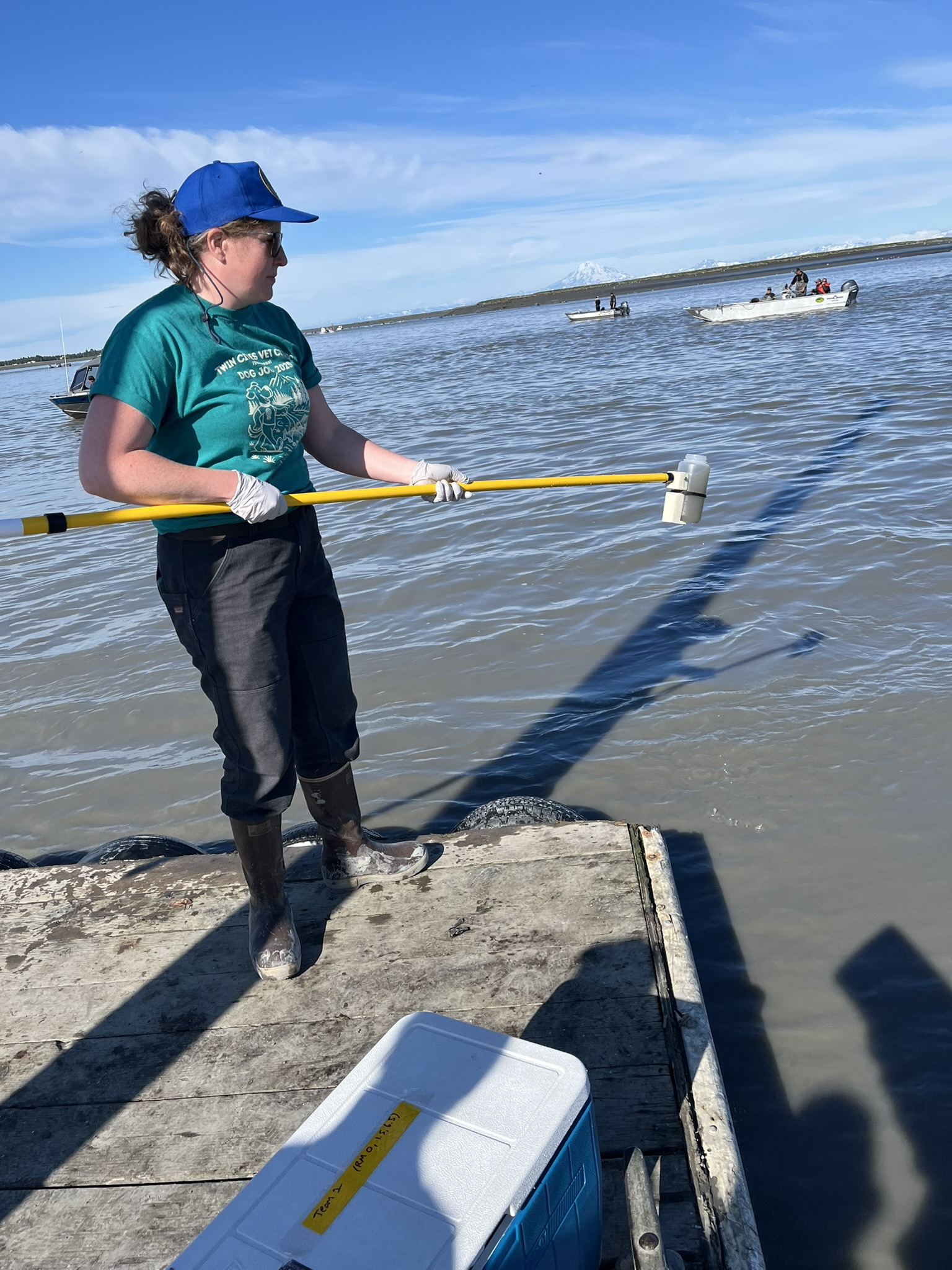
Summer 2025 Kenai River Water Quality Monitoring Data – Preliminary Results Available
January 2, 2026Kenai Watershed Forum has received all laboratory results from it’s Summer 2025 Baseline Water Quality Monitoring. The results are currently being prepared for upload to the Environmental Protection Agency’s Water Quality Exchange, a public data repository for water quality data.
Once the data is prepared, it will be integrated into an in-progress comprehensive summary report, similar to our previous such report published in 2016.
The results are preliminary and have not yet been subject to QA/QC checks or analyzed against water quality standards; this work is in progress.
We worked with two laboratories in Summer 2025:
1.) Soldotna Wastewater Treatment Plant – SWWTP provided analyses of Total Suspended Solids and Fecal Coliform:
Download Summer 2025 Total Suspended Solids results (in progress)
Download Summer 2025 Fecal Coliform results
2.) SGS Laboratories, Anchorage – SGS provided analyses of all other substances monitored in Spring 2025, including nutrients like phosphorus and nitrogen, and metals like zinc, copper, lead, and others:
Download Summer 2025 Metals and Nutrients results
We are extremely grateful to both the City of Soldotna for and SGS Laboratories for providing in-kind services that support this important work!
For questions about 2025 water quality results, contact Benjamin Meyer, Water Quality Coordinator. Thank you again to all the participants and volunteers who made this event happen!
To learn more about this project, visit our website section.
UPDATE 5/1/2026
A report assessing preliminary results from 2025 is available for download as a PDF here.
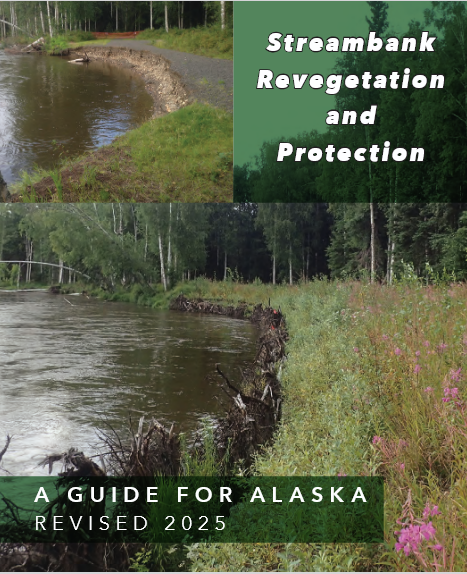
The New 2025 Alaska Streambank Revegetation and Protection Guide is Now Available!
December 17, 2025The new and improved guide to restoring and protecting Alaskan streambanks is now available for free! Download yours here.
Riverbank plants, trees, and shrubs (also known as “riparian vegetation”) play an outsized role in keeping habitat healthy for salmon and other freshwater fish. Riparian vegetation helps prevent bankside erosion, provides shade to help keep waters cool, and provides a source of insects as food for young fish, among many other benefits. When riparian vegetation is damaged or removed, it can take decades to recover.
Riparian vegetation can also be restored using bio-engineering and construction techniques that allow it to grow and change with the river’s natural course. Long gone are the days when riverside property owners were recommended to use old cars, tires, or concrete to stabilize their shoreline on the Kenai Peninsula’s rivers and lakes. Today’s restoration projects use techniques that mimic the best of what nature has to offer like cabling spruce trees to shorelines, planting willows, and installing spruce tree root wads.
Do you know of or own a streambank that could use some love? Let us know, or consider applying for the Cost Share Program, which may cover up to 50% of restoration expenses.
Read more about Kenai Watershed Forum’s streambank restoration work here.
Let’s work together to keep the Kenai Peninsula streambanks healthy!

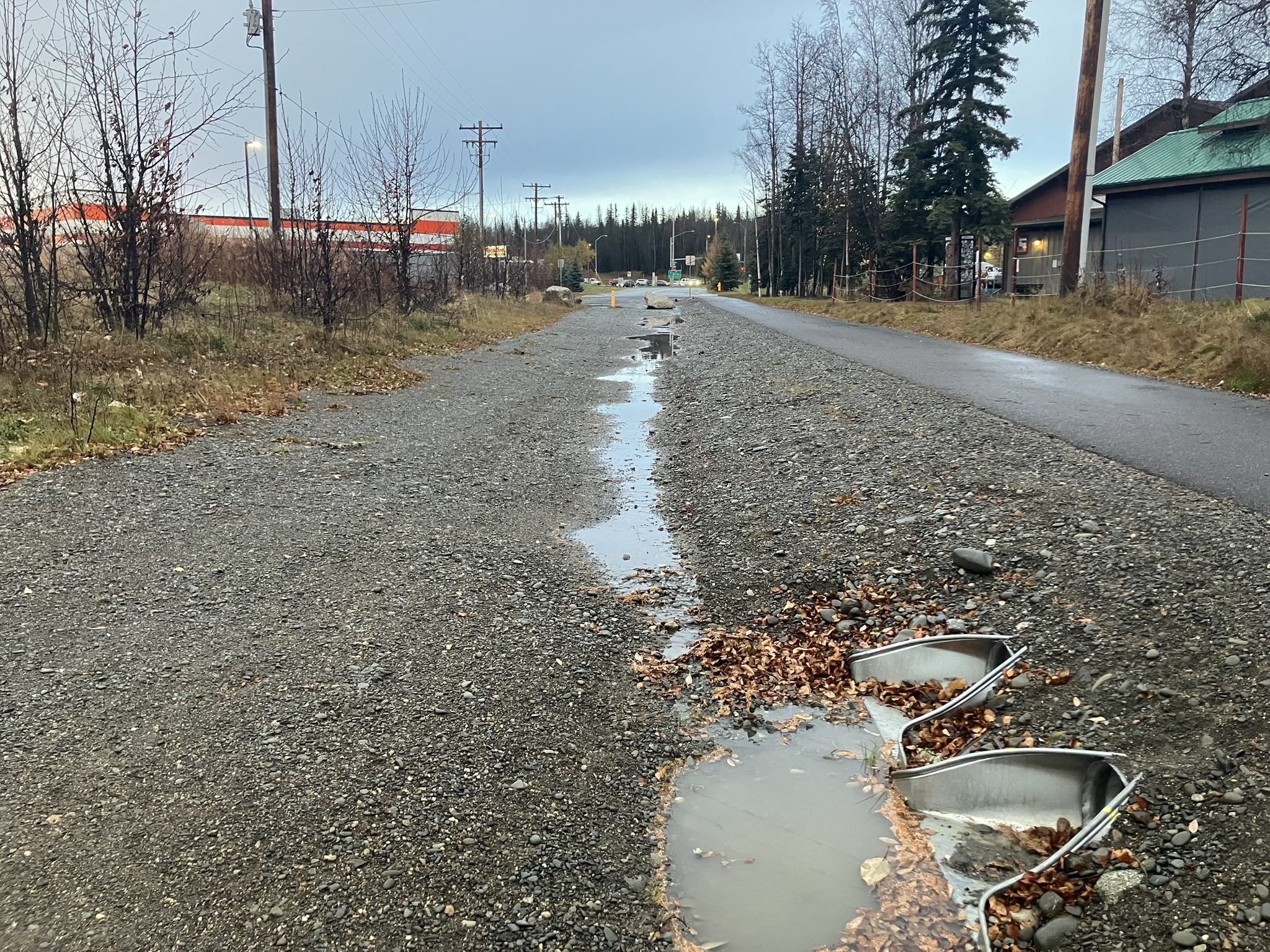
Then & Now: Impervious Surface Growth and Stormwater Runoff on the Lower Kenai River
December 9, 2025Above: stormwater runoff from impervious surfaces flows towards two small culverts in Soldotna, Fall 2025
Between 1980 to 2021, population in the Kenai Peninsula Borough more than doubled, growing by more than 130% from approximately 25,000 residents to approximately 60,000 residents. With the influx of people moving to the Kenai Peninsula, total area in the lower Kenai River covered by impervious surfaces including roads, roofs, and cleared lots increased by 22% in that same time frame. With the increase in impervious surfaces, the potential for untreated stormwater runoff increases, threatening water quality of the rivers, lakes, ponds and other natural resources.
Kenai Watershed Forum’s office regularly receives calls from concerned local citizens about stormwater pollutants including road salts, tire particles, and others. Is this something we should be worried about in the Kenai River and its tributaries? And do we have data to know? The respective answers are yes and no. Yes, we should be concerned, because nearly all riverside communities throughout history experience stormwater runoff issues as they grow in size and population; and no, there is currently no comprehensive, annual monitoring program that specifically targets stormwater runoff in the Kenai River. While the Kenai River Baseline Comprehensive Water Quality Monitoring program monitors water quality biannually throughout the Kenai River, and the city wastewater treatment plants of Kenai and Soldotna also monitor their treated waters, none of these efforts are structured to specifically study stormwater runoff or assess its sources.
The good news is, several projects funded by the Kenai Peninsula Fish Habitat Partnership are tackling this challenge.
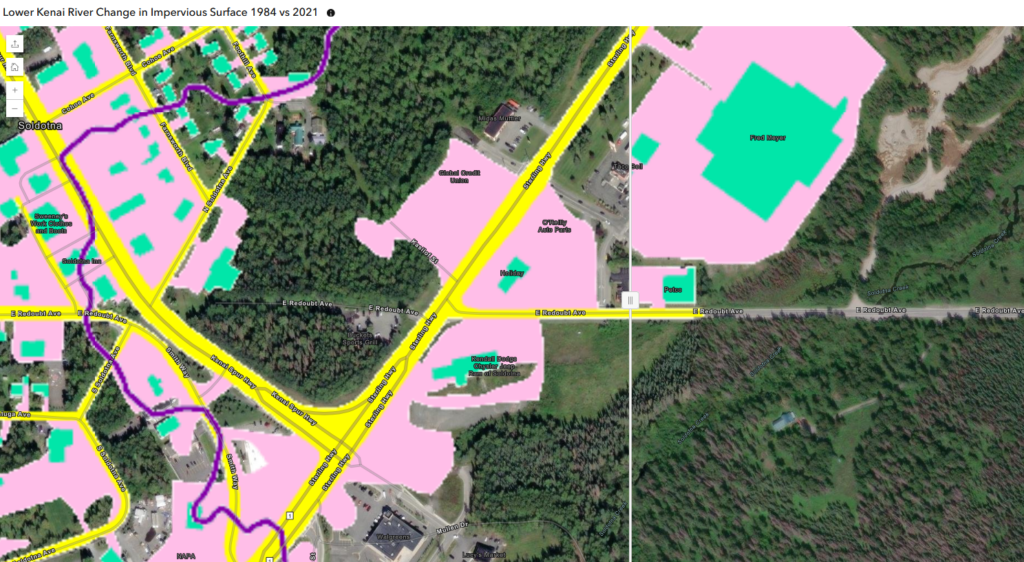
In 2021 Kenai Watershed Forum worked with St. Mary’s University of Minnesota Geospatial Services (SMU GSS) to map and understand changes in impervious surfaces in the areas surrounding the cities of Kenai and Soldotna. SMU GSS used an innovative semi-automated approach to identify and map impervious surfaces, and calculated summary statistics. In addition to the 22% overall increase in impervious surfaces mentioned above, other highlights include a 100% increase in roof areas, and a 3% increase in total paved road areas. This is a rich dataset that researchers can use to address many future questions, and final report is available here.

In 2024 SMU GSS followed up with a pilot project to identify local “stormwater hotspots.” Using the impervious surfaces layers from the previous project, they explored feasibility of using GIS analysis to pinpoint specific locations where stormwater runoff accumulated to specific pour points. With knowledge of these locations, we can begin to recommend solutions, such as settling ponds, bioswales, or other “green stormwater infrastructure” solutions to intercept this runoff. The report (available here) highlighted a few critical missing elements of local datasets and recommendations for researchers and managers going forward.
In 2025, Kenaitze Indian Tribe was awarded a grant to expand local surface water quality monitoring efforts. Following feedback from the tribal environmental council, Kenaitze will be working with Kenai Watershed Forum to assess water quality in new locations and addressing new parameters. The grant also supports collaboration with Kenaitze summer interns, who will be gain field experience and mentoring. This work will kick off in spring 2026, and we can’t wait to see what we can learn.
Sign up for our newsletter to follow us on this project, or sign up as a Stream Watch volunteer to learn how you can get involved!
– Benjamin Meyer, Research Coordinator