

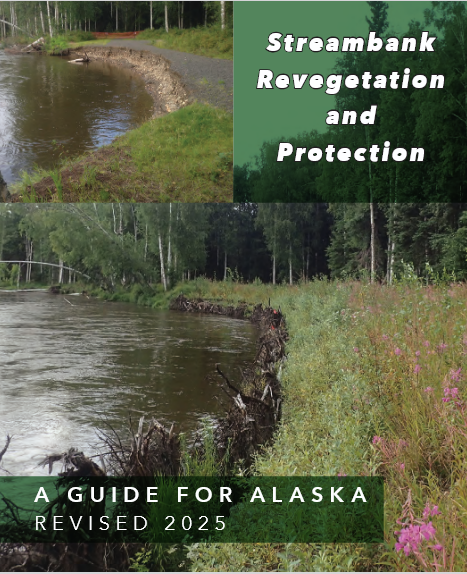
The new and improved guide to restoring and protecting Alaskan streambanks is now available for free! Download yours here.
Riverbank plants, trees, and shrubs (also known as “riparian vegetation”) play an outsized role in keeping habitat healthy for salmon and other freshwater fish. Riparian vegetation helps prevent bankside erosion, provides shade to help keep waters cool, and provides a source of insects as food for young fish, among many other benefits. When riparian vegetation is damaged or removed, it can take decades to recover.
Riparian vegetation can also be restored using bio-engineering and construction techniques that allow it to grow and change with the river’s natural course. Long gone are the days when riverside property owners were recommended to use old cars, tires, or concrete to stabilize their shoreline on the Kenai Peninsula’s rivers and lakes. Today’s restoration projects use techniques that mimic the best of what nature has to offer like cabling spruce trees to shorelines, planting willows, and installing spruce tree root wads.
Do you know of or own a streambank that could use some love? Let us know, or consider applying for the Cost Share Program, which may cover up to 50% of restoration expenses.
Read more about Kenai Watershed Forum’s streambank restoration work here.
Let’s work together to keep the Kenai Peninsula streambanks healthy!